


News
Why the U.S. Milking Herd is Growing Despite Record-Low Replacement Numbers
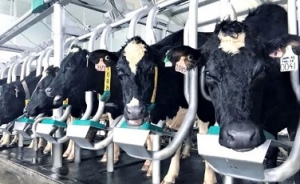
The traditional “manual” for running a dairy farm is being rewritten in real-time. For decades, the math was straightforward: cull underperforming cows, raise as many replacement heifers as possible, and focus almost exclusively on fluid milk volume. Today, that equation has been upended by a historic surge in the beef market and a genomic revolution that is fundamentally changing the biological output of the American herd.
According to Abbi Prins, a livestock analysis from CoBank’s knowledge exchange division, the industry is currently navigating a structural shift where the value of a cow is no longer tied solely to her milk production, but to her role as a surrogate for the high-value beef market. This beef-on-dairy movement is redefining heifer inventories, culling strategies and the very composition of the milk hitting the processing plants.
The Heifer Inventory Paradox
The current state of the U.S. heifer inventory is a primary point of concern for the industry. Historically, a tight heifer supply would signal an impending contraction in milk production. However, the U.S. milking herd remains robust, sitting at over 9.5 million head — the largest in over 30 years.
According to Prins, the reason for this paradox isn’t just producers holding onto older cows; it is a calculated shift in how they view their elite genetics.
“The beef-on-dairy movement has played a huge role in where total inventories stand,” Prins explains. “Dairy producers have found that when it comes down to profitability, they are breeding their elite animals for replacements and everything else to beef. You get a better price for that animal selling it as a beef-cross than you do making an extra replacement heifer that you might not need.”
This strategy has rewritten the traditional culling manual. In the past, if a cow wasn’t covering her feed costs or was underperforming in the parlor, she was sent to the back door. Today, the black calf in her uterus — often worth upward of $1,400 — acts as a high-value insurance policy.
“The equation is not as conducive to culling anymore because of where the beef market stands,” Prins says. “The value of that beef-on-dairy calf is worth more than just selling that cow off to be culled. It’s the reason we’re keeping cows longer.”
Holstein Cows Who Milk Like Jerseys
While the herd is skewing older, it is also becoming remarkably more efficient in terms of components. Prins notes a sentiment shared by International Dairy Foods Association CEO Michael Dykes: modern Holsteins are starting to milk like Jerseys.
“The shift in genomics to be able to produce more components is a big deal,” Prins says. “We are seeing record butterfat and protein levels. Even though the milk price is strained, producers are adding $3 to $4 a hundredweight to the bottom line because of these beef-on-dairy calves and high component values.”
Prins dismissed concerns that keeping older cows longer would result in a loss of genetic potential for the national herd. Because producers are being much more surgical with their breeding — using gender-sorted semen on only their top-tier animals — the next generation of replacements is genetically superior to anything the industry has seen before. The older cows are simply serving as surrogates for the terminal beef market, fulfilling a dual purpose that keeps the farm’s balance sheet afloat.
Weathering the 2026 Storm
As Prins looks toward the next six to 12 months, her forecast is one of “sadly optimistic” realism. She anticipates a slow, strategic pullback in the national herd size rather than a massive move.
“If we send too many cows to the back door at once, we create other issues,” she warns. “I’m hoping for a slow trickle down in cow numbers over the next six months, which should hopefully help the milk price rebound as we move out of this oversupply situation.”
Regarding the beef market, Prins is keeping a close eye on USDA’s cattle reports. While a rebuilding of the beef herd is inevitable, she believes the dairy-beef market has at least two more years of strength.
“Even if we start rebuilding the beef herd, we have to keep extra heifers on the cow-calf ranch, which further contracts the immediate beef supply. With strong consumer demand, that beef-on-dairy price should stay buoyant for the next couple of years,” she says.
The Bullish Bottom Line
When asked if the dairy industry is on the verge of a recession, Prins remains cautious. She points out traditional metrics, like how much Dairy Margin Coverage (DMC) is paying, don’t account for cull cow revenue, calf sales or labor costs, and therefore don’t tell the whole story.
“If you look at milk income over feed cost, it looks tough,” Prins admits. “But if you add beef-on-dairy into the equation, we’re not looking so bad.”
For Prins, the path to long-term gains requires enduring some short-term pains. She remains bullish on the industry’s future, citing massive investments in dairy processing and the stability of feed costs — barring any catastrophic weather events.
“Agriculture is cyclical. The highs eventually end, and the lows eventually come back up,” she concludes. “Between the processing investment and the beef-on-dairy market, there are a lot of things to be bullish about. The dairy industry is in a good position to rebound without turning the table.”